


Sichuan, malatang lets you grab a steaming bowl of customised spicy noodle soup in about 10 to 15 minutes. No need to gather a crowd or spend hours cooking at the table.
It’s the perfect meal for when you want those signature Sichuan flavours in a simpler approach. Let’s unpack the differences between malatang vs hotpot, and find out which works for you.
Malatang (麻辣烫, málàtàng) translates to “numbing spicy hot” – and that’s exactly what you get.
This Sichuan street food originated along the Yangtze River, where boat workers would simmer herbs, Sichuan pepper, and ginger in communal pots to stay warm during the foggy winters. What started as workers’ fuel became one of China’s most popular street foods by the 2010s.
The magic happens in the broth. Sichuan peppercorns create that distinctive numbing sensation (the “má”), while dried chillies bring the heat (the “là”). You’ll taste ginger, garlic, and often doubanjiang (fermented chilli bean paste) layered into every spoonful.
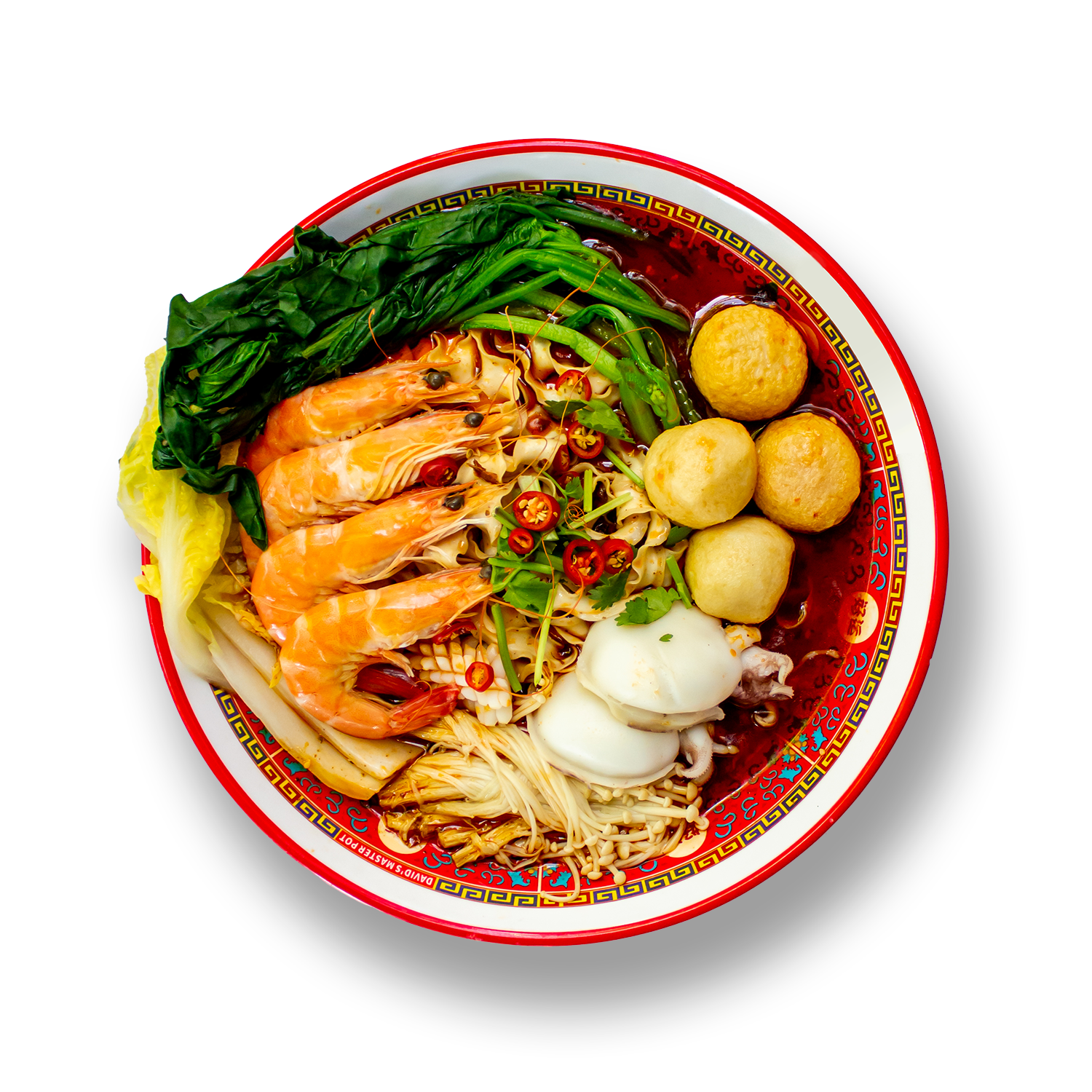
Pick from fresh vegetables like bok choy, mushrooms, lotus root, and bamboo shoots. Add proteins (thinly sliced beef, fish balls, prawns, or tofu). Choose your noodles. Everything goes into your bowl, gets weighed, and the kitchen cooks it in the bubbling broth.
But are hot pot and malatang the same? Not quite. Here’s the key difference: malatang is hotpot for one, served fast.
| Category | Malatang | Traditional Hotpot |
| Best For | Solo meals, quick lunches, weeknight cravings | Group catch-ups, celebrations, long relaxed dinners |
| Dining Style | Individual bowl, cooked by the kitchen | Shared pot cooked at the table by diners |
| Time Required | Fast, usually ready in 10 to 15 minutes | Slow and social, often 1 to 3 hours |
| How You Order | Choose your ingredients buffet-style | Order set portions for the table |
| Pricing | Charged by weight (pay for exactly what you want) | Set prices per plate or per person |
| Flavour Experience | Bold, concentrated flavours in your own customised bowl | Layered flavours you build over time in a shared broth |
| Atmosphere | Casual, quick, perfect for busy schedules | Communal, leisurely, ideal for long chats and shared moments |
| Great For… | A spicy pick-me-up between classes or a simple dinner for one | Birthdays, date nights, group hangouts, weekend feasts |
The malatang vs hotpot debate really comes down to time and occasion. Save traditional hotpot for a group celebration. Choose malatang when you’re craving those same flavours on a Tuesday lunch break.
First-timer? Here’s how it works at places like David’s Master Pot:
David’s Master Pot Tip: Don’t load up on just noodles. Mix proteins, vegetables, and noodles for the best balance. The price is by weight, so that bowl of beef costs the same per 100g as that bowl of glass noodles.
Melbourne’s food scene has embraced malatang for good reason. Our unpredictable weather makes a warming bowl of spicy broth hit differently, whether it’s a cold July night or a surprisingly chilly summer evening.
David’s Master Pot brings authentic Sichuan malatang to Melbourne, with a Sichuan restaurant in Clayton, and franchises offering malatang in Box Hill and malatang on Elizabeth Street. Your next go-to meal might just be bubbling away in our kitchen right now.
We offer a variety of choices for Malatang soup base and Stir-fry spicy pot